
Go back

Firmware-Over-The-Air (FOTA): Designing FOTA Experience to Update Devices Firmware Remotely Directly from Nearon
Involvement
Product strategy
Interaction design
Interaction design
User research
Platform
Client and Internal (Website)
Product
Nearon
Year
2025



Introduction
As a founding designer for Nearon, I learn about the business process for Nearon (IoT industries). By discussing with the Head of hardware Technology Delivery, I found out that the hardware team had to maintain and update firmware manually. They needed to check, set up and update firmware one by one in its device settings after plug in it to a laptop, this acitivity cost a lot of time and money to send engineer to clients site which mostly in the mining area like Kalimantan or Sumatra (our hardware office in Jakarta)
Discover Problem
- Still used Traditional way to set up and update firmware → The hardware team needs to come to the client site and plug in to each device to update the firmware which was used to set up the devices. That makes maintenance time consuming and costly both for Synapsis and clients, we failed to make the product seamless.
- As Synapsis offer personalized solutions → That makes Synapsis a dual challenge for customization: Basically our products act as IoT Gateways that can be used to monitor different sensors or integrate different products means devices with the same model can use different firmware. Each client also has a different business process so we can’t force them to update the hardware while the business still operates.
Opportunity
How
might
we
help
the
hardware
team
to
set
up
and
update
devices
firmware
in
clients’
remote
sites
with
minimum
human
interaction
to
the
devices?
In the current journey to update the firmware, the hardware team should come to sites, connect the devices to the laptop with cable, transfer the new firmware, install it, then reboot the devices. They do all of those manually which costs a lot of money and time just to update the firmware. The opportunity was to design an experience that allows them to maintain and update those devices wirelessly with minimum interaction with the devices.
Solutioning
I do research on competitors with the same industries (hardware or IoT) on how they manage and update devices' firmware. Many companies commonly use the concept of FOTA (firmware-over-the-air) to update device firmware or software wirelessly. Basically they share the firmware in the server and the device periodically will check and notify for firmware update to the device then users can update it when they are ready.
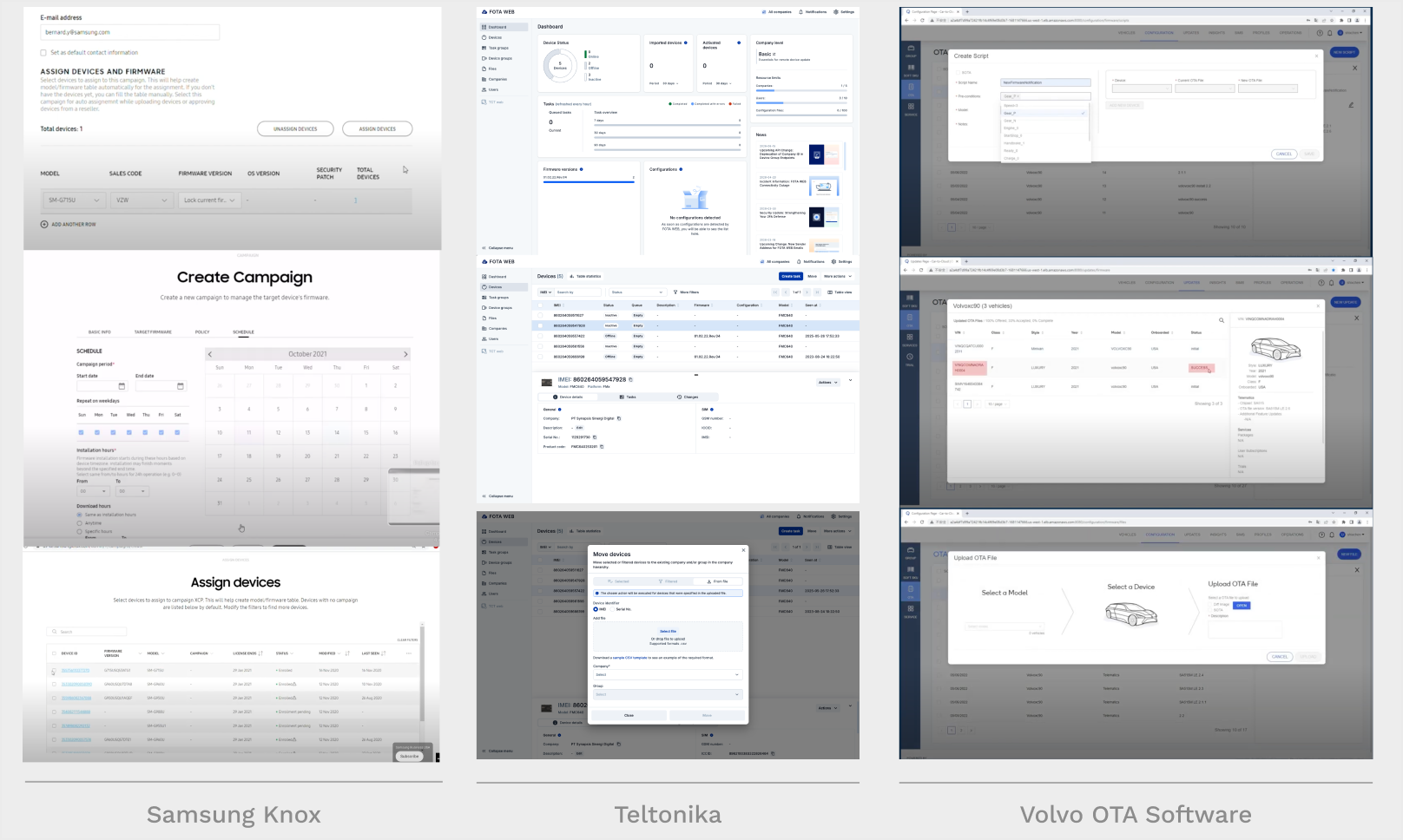
↑ Competitor analysis
The flow below illustrates the device journey on updating firmware or software wirelessly using the concept of FOTA
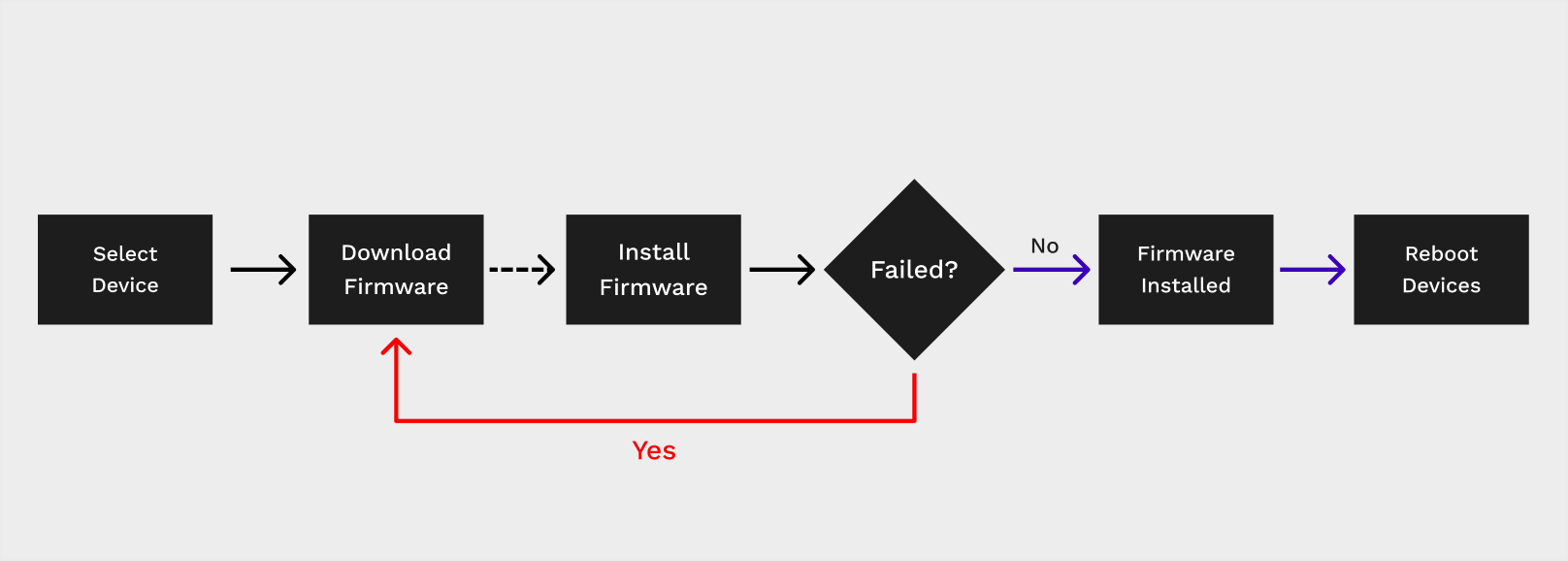
↑ Firmware-Over-The-Air flow
Revamp the old design and hardware team workflow.

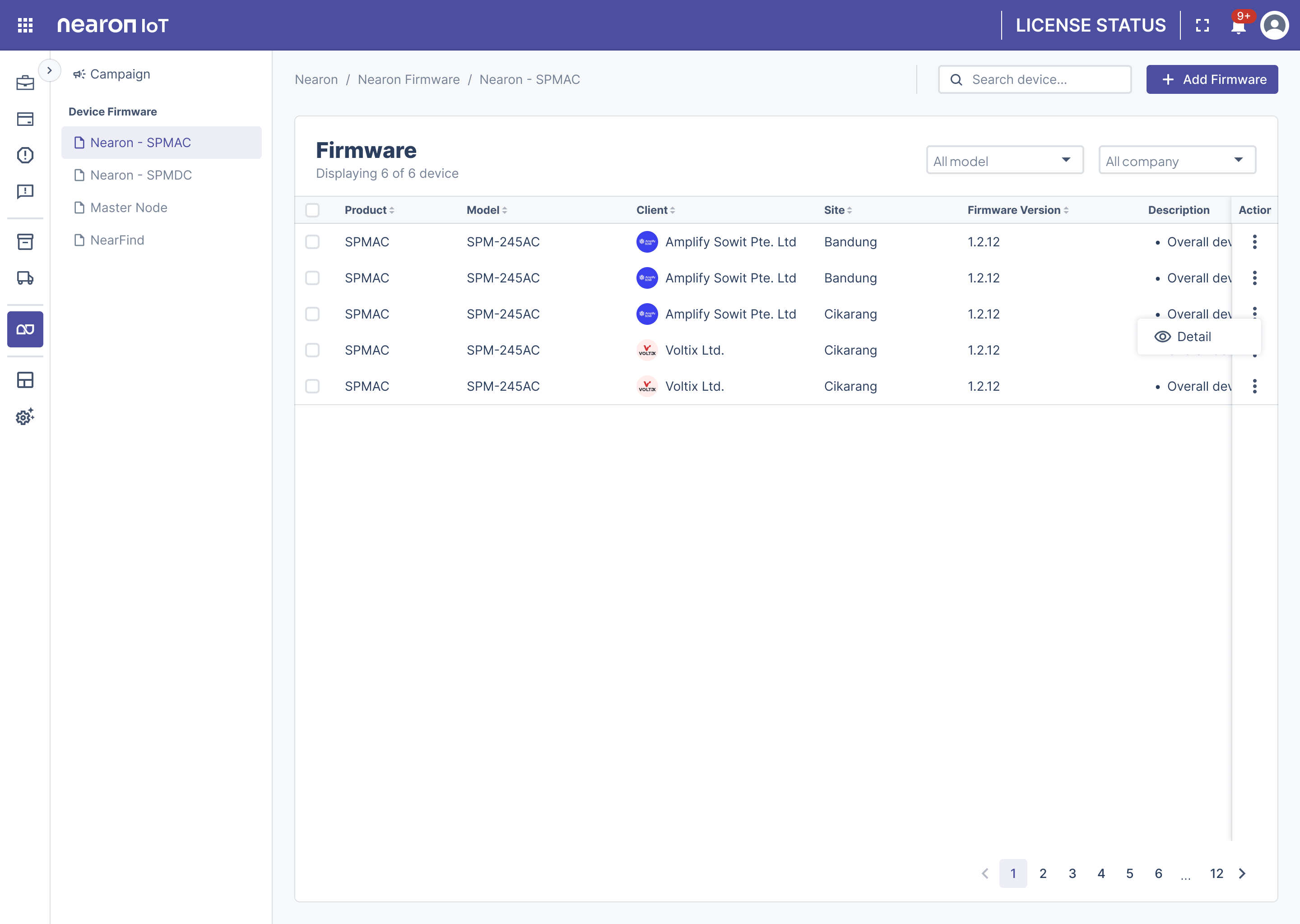
Synapsis has a lot of applications with old UI only to do 1 task separately → Hardware team has application to configure device, managing device, managing client and managing license. A lot of those applications has overlapping features, resulting in inefficient and long journeys for the internal team. So I use this project to integrate all of it into one platform “Nearon Admin”.

Managing released Nearon devices → Synapsis always write devices with clients specific customization with diferent models. So they can stay aware if their devices have an update since not every client can get this update.

Information Campaign → We add a feature to blast notification for clients to inform them about new firmware updates fot their devices. So they can stay aware if their devices have an update since not every client can the update.
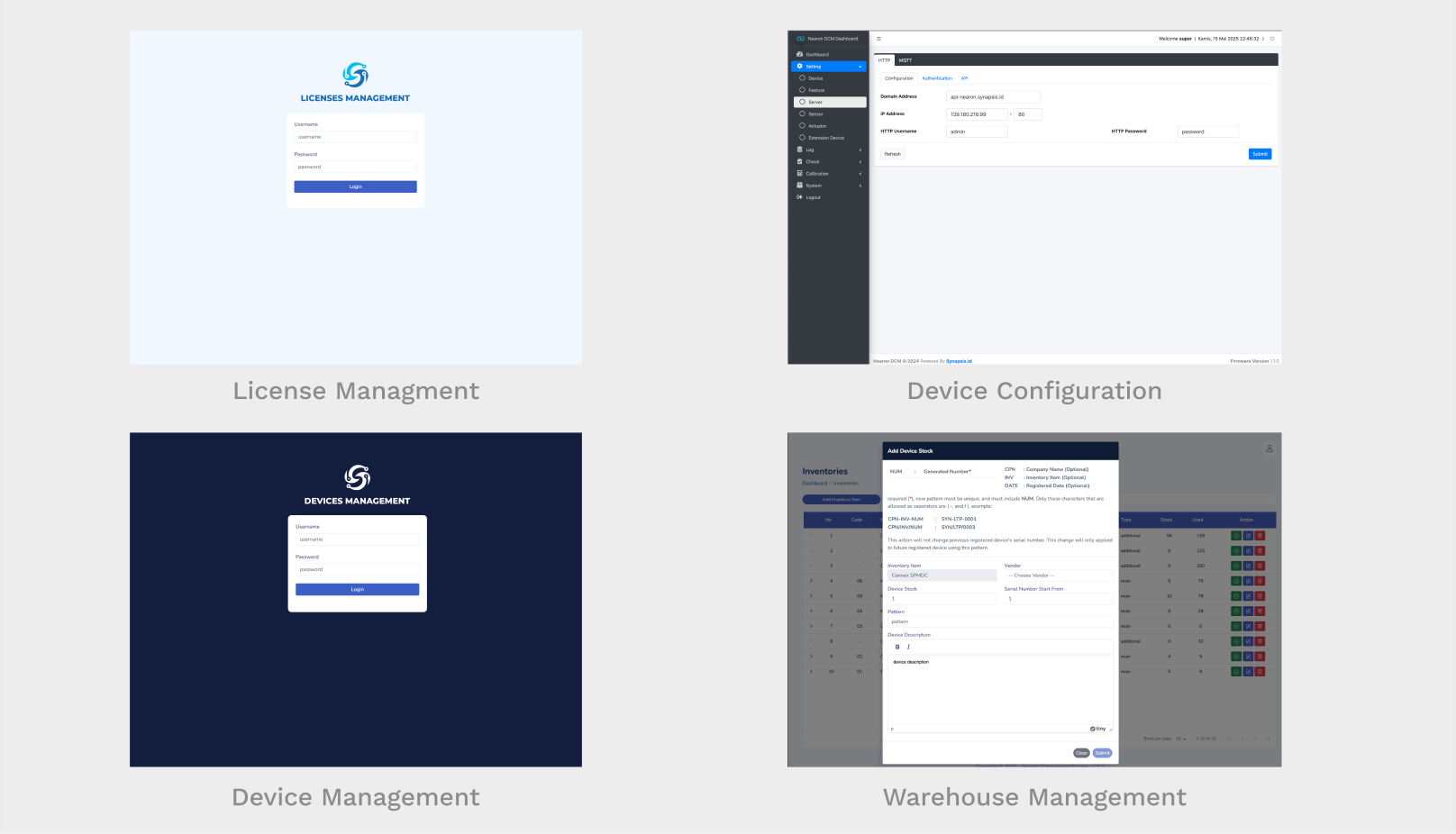
↑ The previous applicaiton: a lot.
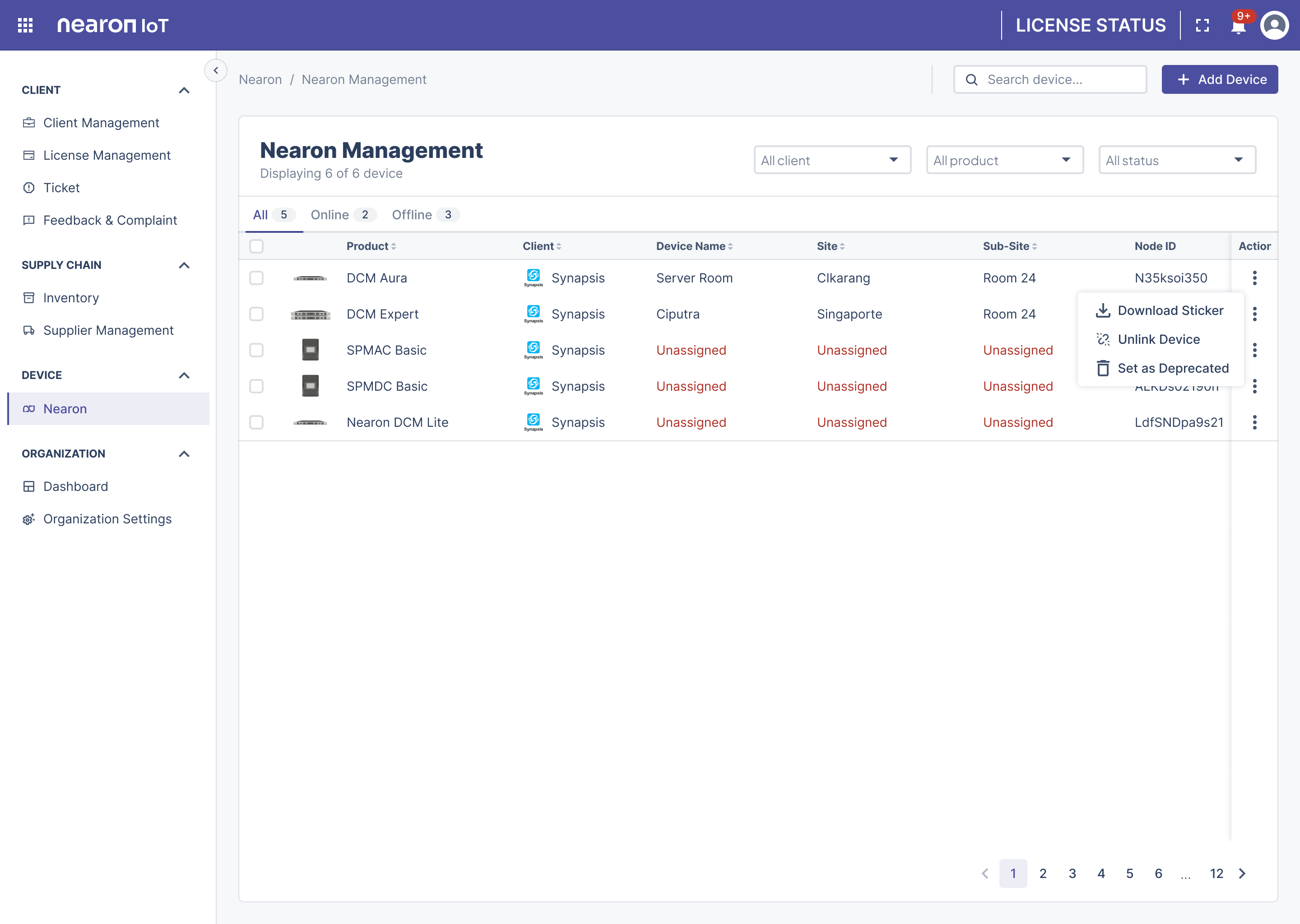
↑ New UI: Nearon Admin
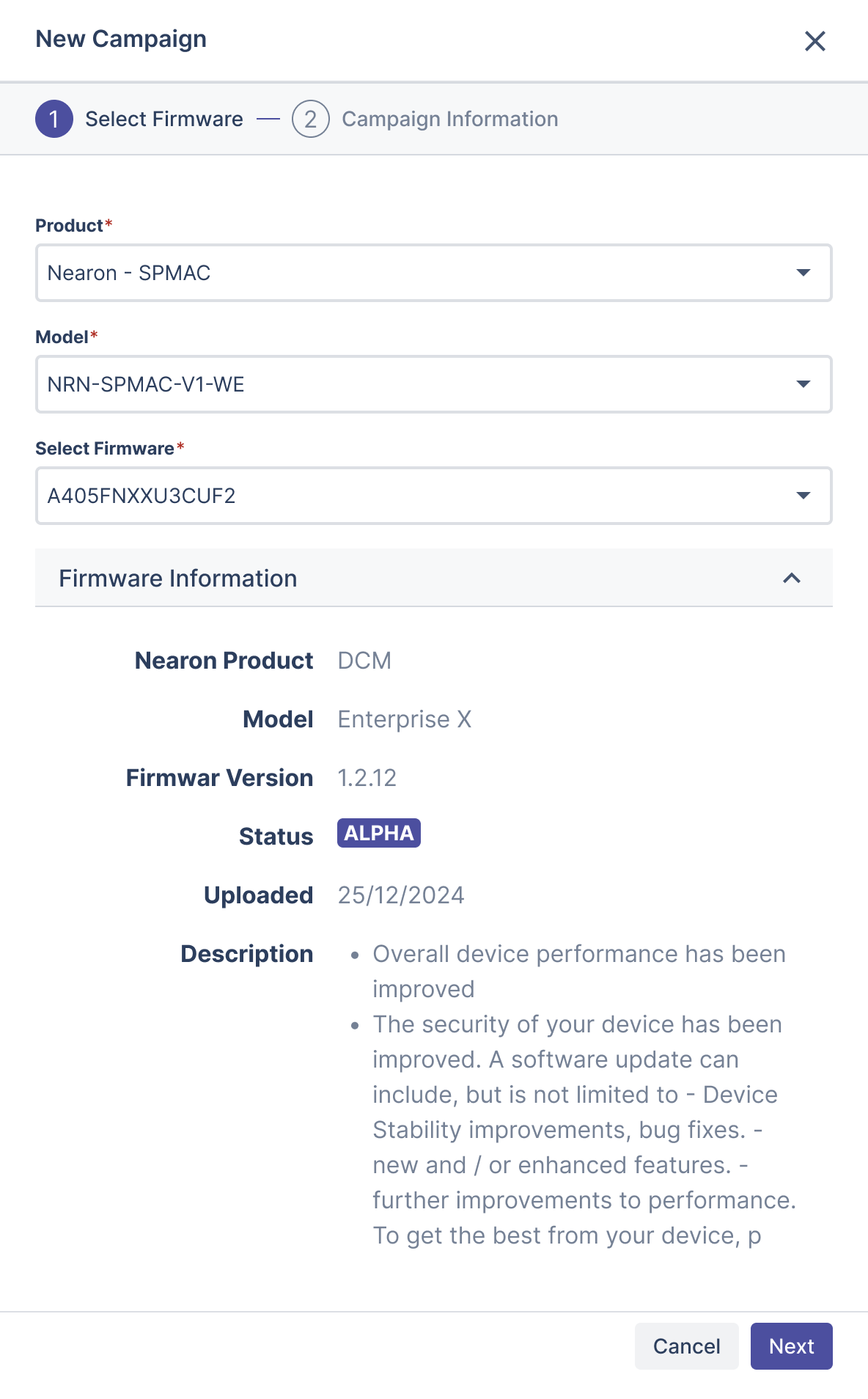
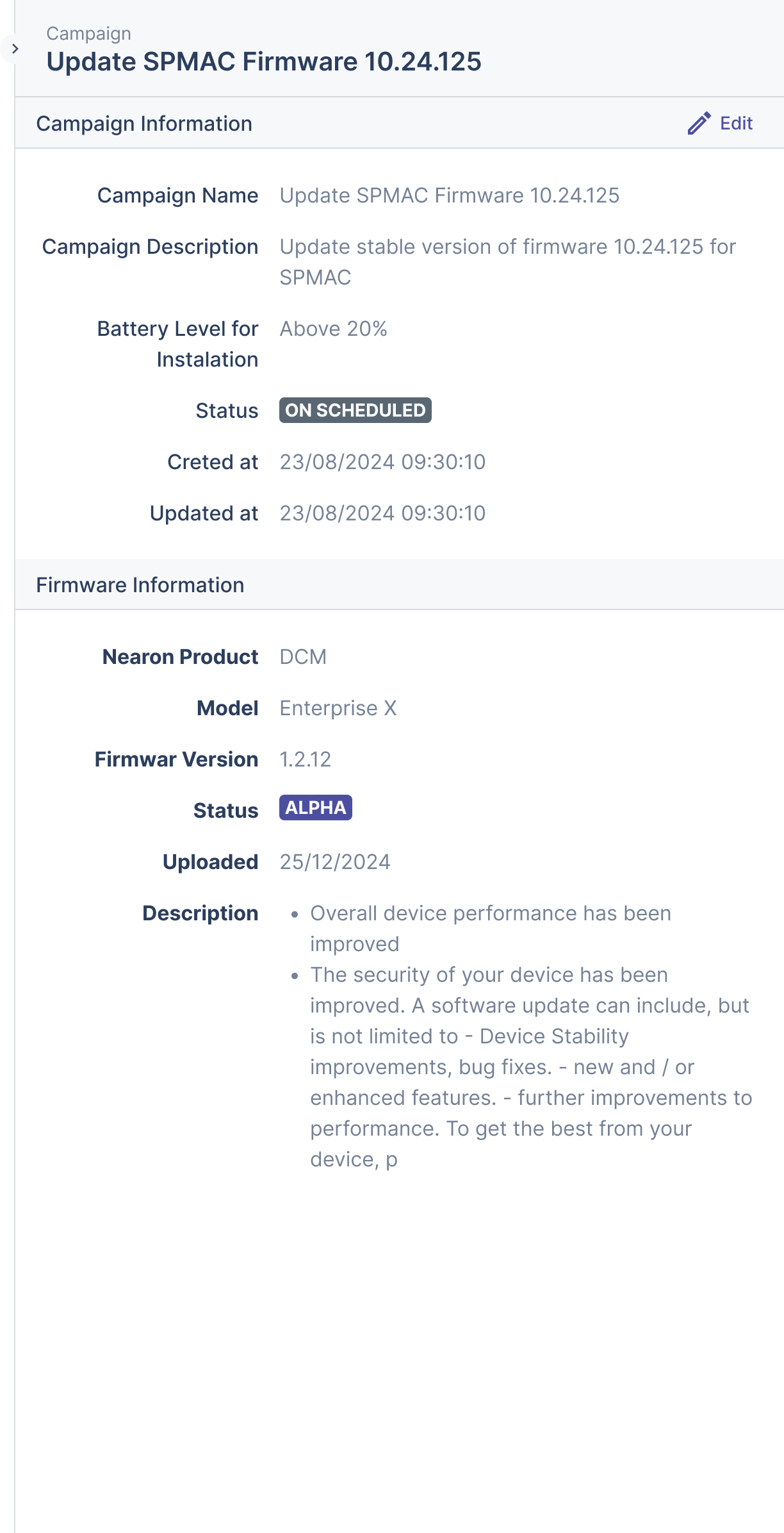
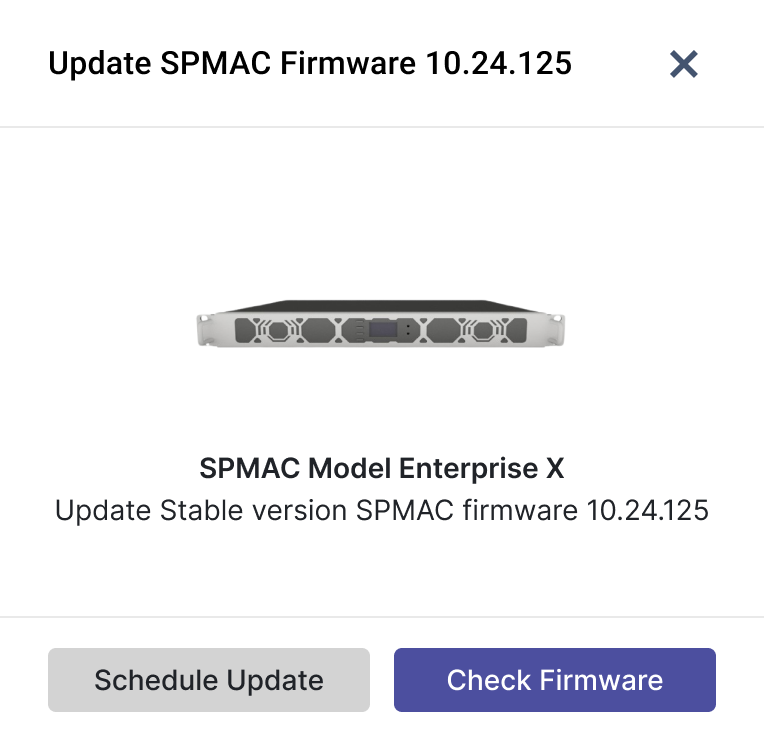
↑ Information campaign
Scheduled firmware update to prevent operational disruption
We don’t want to interrupt client business while updating the firmware, but we also encourage them to update it to get bug fixes, security enhancement, hardware compability, performenace optimization or new features. This update important for both of us and clients to make sure the devices are not getting any issues while being used.
- Scheduling updates → Based on hardware team information during the interview process, the device should reboot first to optimally use the newest firmware. But it will disrupt the business operations, s we update the flow and add scheduled features.In mining (most of our cusotmer) use the intranet concept due to connection issues, so we also give them the option to download the firmware when online with internet and update it to devices across the intranet connection.
- Human error prevention → we want user to acknowledge every decision they make, since this action will disrupt their operational in sites and we don’t want them to do that. So we add confirmation form before they updating the firmware or scheduling an update.


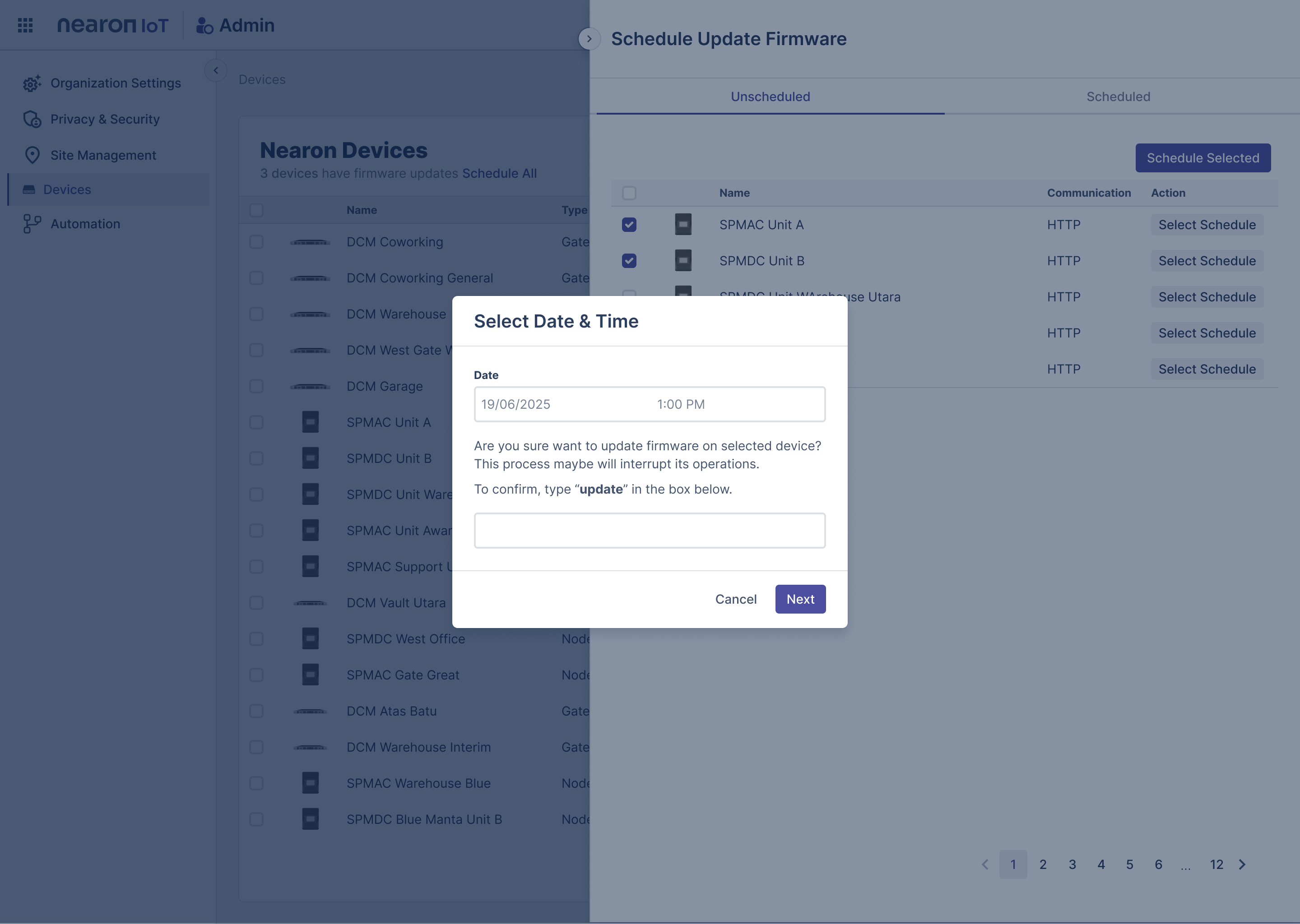
↑ Scheduling and confirming scheduling firmware update
Final design
After multiple round of design review, internal testing, and alignements with stakeholders, we arrive at a final solution that adapts FOTA as standard to remotely update and set up clients devices firmware. By refining and integrating with modern interaction, we transformed teh experience both to hardware team and the clients. Minimizing device-engineer interaction when manage update for released devices.


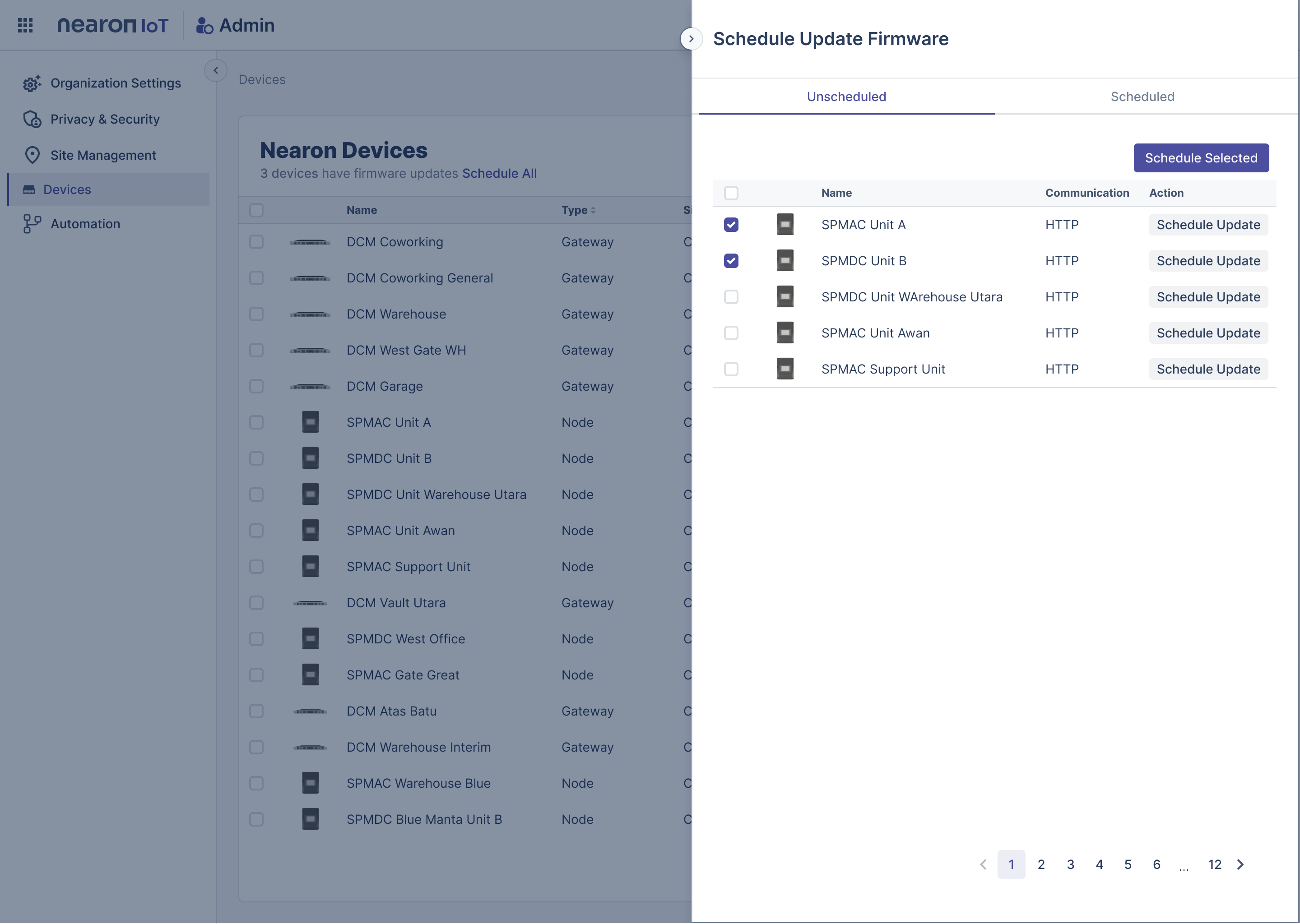
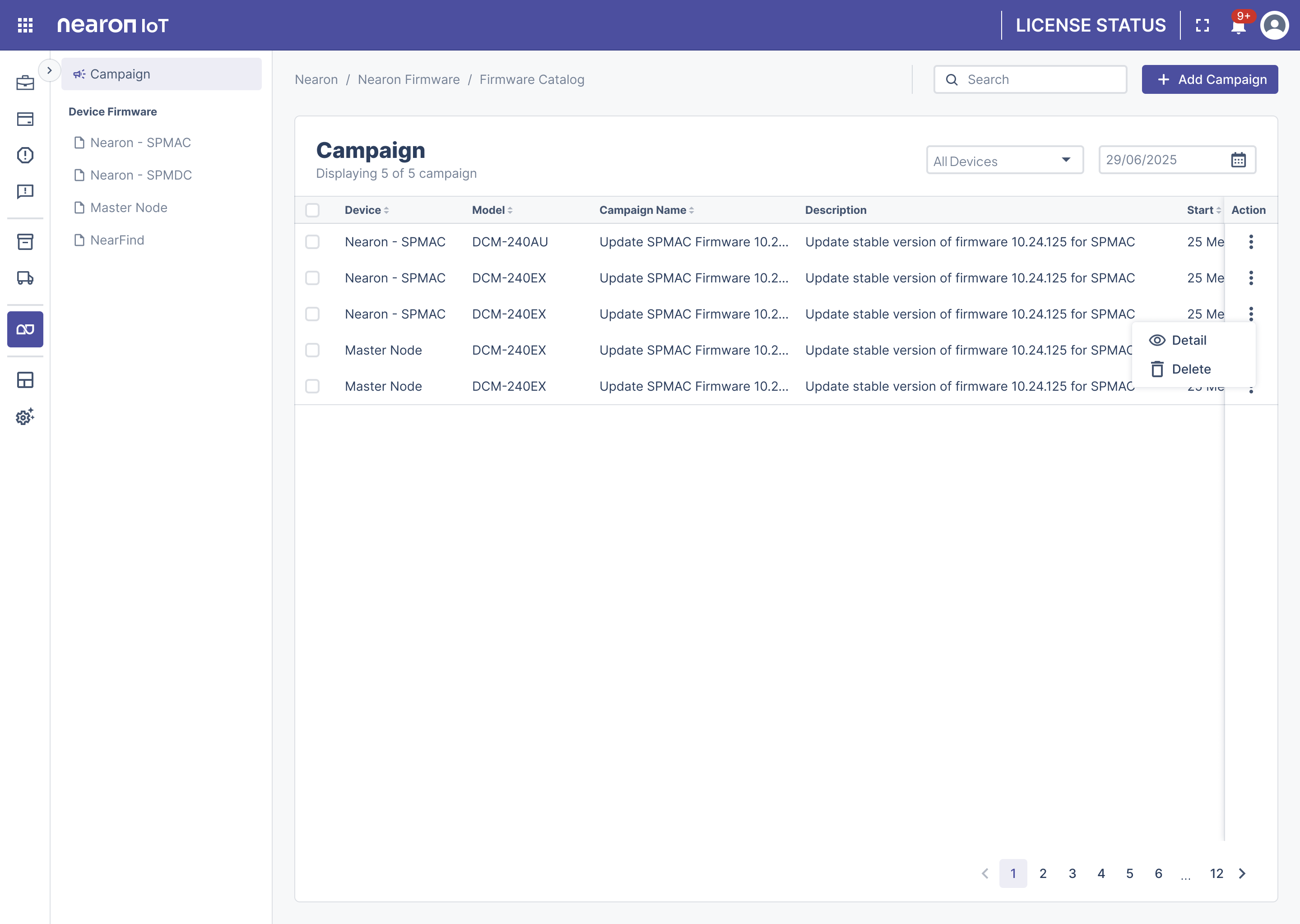
↑ Confirmation Styles
Key Takeaways
This project broadened my knowledge in how the IoT industry works, demonstrated how design initiatives can spot the problem and influence operational workflow in the entire ecosystem, bridge the gap between business objectives and technology by providing a new standard on how Synapsis maintain and update released devices on clients. But the process is not easy, why?
Business validation challenge → Since companies are in product market fit phase, they minimize innovation to the product before the product fits the client majority business problem. It creates a challenge to get the product stakeholder buy in, but this approach helps Synapsis to add new unique value for its product and make maintenance cost cheaper both for Synapsis and client.
Designing new workflow → FOTA are commonly used in the IoT and hardware industry to maintain their released product, so it's strange if Synapsis don't use the same or better methods since it is beneficial for Synapsis. This design will be used as standard for various use cases when teams want to wirelessly maintaining devices.
Personalized/customized solutions → Personalized/customized solutions services doesn’t mean we need to make designs on every client but it force us to scale the solutions, it made us add another edge case to the main flow.
End
Go back
Go back

Firmware-Over-The-Air (FOTA): Designing FOTA Experience to Update Devices Firmware Remotely Directly from Nearon
Involvement
Product strategy
Interaction design
Interaction design
User research
Platform
Client and Internal (Website)
Product
Nearon
Year
2025


Introduction
As a founding designer for Nearon, I learn about the business process for Nearon (IoT industries). By discussing with the Head of hardware Technology Delivery, I found out that the hardware team had to maintain and update firmware manually. They needed to check, set up and update firmware one by one in its device settings after plug in it to a laptop, this acitivity cost a lot of time and money to send engineer to clients site which mostly in the mining area like Kalimantan or Sumatra (our hardware office in Jakarta)
Discover Problem
- Still used Traditional way to set up and update firmware → The hardware team needs to come to the client site and plug in to each device to update the firmware which was used to set up the devices. That makes maintenance time consuming and costly both for Synapsis and clients, we failed to make the product seamless.
- As Synapsis offer personalized solutions → That makes Synapsis a dual challenge for customization: Basically our products act as IoT Gateways that can be used to monitor different sensors or integrate different products means devices with the same model can use different firmware. Each client also has a different business process so we can’t force them to update the hardware while the business still operates.
Opportunity
How
might
we
help
the
hardware
team
to
set
up
and
update
devices
firmware
in
clients’
remote
sites
with
minimum
human
interaction
to
the
devices?
In the current journey to update the firmware, the hardware team should come to sites, connect the devices to the laptop with cable, transfer the new firmware, install it, then reboot the devices. They do all of those manually which costs a lot of money and time just to update the firmware. The opportunity was to design an experience that allows them to maintain and update those devices wirelessly with minimum interaction with the devices.
Solutioning
I do research on competitors with the same industries (hardware or IoT) on how they manage and update devices' firmware. Many companies commonly use the concept of FOTA (firmware-over-the-air) to update device firmware or software wirelessly. Basically they share the firmware in the server and the device periodically will check and notify for firmware update to the device then users can update it when they are ready.
↑ Competitor analysis
The flow below illustrates the device journey on updating firmware or software wirelessly using the concept of FOTA
↑ Firmware-Over-The-Air flow
Revamp the old design and hardware team workflow.
Synapsis has a lot of applications with old UI only to do 1 task separately → Hardware team has application to configure device, managing device, managing client and managing license. A lot of those applications has overlapping features, resulting in inefficient and long journeys for the internal team. So I use this project to integrate all of it into one platform “Nearon Admin”.
Managing released Nearon devices → Synapsis always write devices with clients specific customization with diferent models. So they can stay aware if their devices have an update since not every client can get this update.
Information Campaign → We add a feature to blast notification for clients to inform them about new firmware updates fot their devices. So they can stay aware if their devices have an update since not every client can the update.
↑ The previous applicaiton: a lot.
↑ New UI: Nearon Admin
↑ Information campaign
Scheduled firmware update to prevent operational disruption
We don’t want to interrupt client business while updating the firmware, but we also encourage them to update it to get bug fixes, security enhancement, hardware compability, performenace optimization or new features. This update important for both of us and clients to make sure the devices are not getting any issues while being used.
- Scheduling updates → Based on hardware team information during the interview process, the device should reboot first to optimally use the newest firmware. But it will disrupt the business operations, s we update the flow and add scheduled features.In mining (most of our cusotmer) use the intranet concept due to connection issues, so we also give them the option to download the firmware when online with internet and update it to devices across the intranet connection.
- Human error prevention → we want user to acknowledge every decision they make, since this action will disrupt their operational in sites and we don’t want them to do that. So we add confirmation form before they updating the firmware or scheduling an update.


↑ Scheduling and confirming scheduling firmware update
Final design
After multiple round of design review, internal testing, and alignements with stakeholders, we arrive at a final solution that adapts FOTA as standard to remotely update and set up clients devices firmware. By refining and integrating with modern interaction, we transformed teh experience both to hardware team and the clients. Minimizing device-engineer interaction when manage update for released devices.


↑ Confirmation Styles
Key Takeaways
This project broadened my knowledge in how the IoT industry works, demonstrated how design initiatives can spot the problem and influence operational workflow in the entire ecosystem, bridge the gap between business objectives and technology by providing a new standard on how Synapsis maintain and update released devices on clients. But the process is not easy, why?
Business validation challenge → Since companies are in product market fit phase, they minimize innovation to the product before the product fits the client majority business problem. It creates a challenge to get the product stakeholder buy in, but this approach helps Synapsis to add new unique value for its product and make maintenance cost cheaper both for Synapsis and client.
Designing new workflow → FOTA are commonly used in the IoT and hardware industry to maintain their released product, so it's strange if Synapsis don't use the same or better methods since it is beneficial for Synapsis. This design will be used as standard for various use cases when teams want to wirelessly maintaining devices.
Personalized/customized solutions → Personalized/customized solutions services doesn’t mean we need to make designs on every client but it force us to scale the solutions, it made us add another edge case to the main flow.
End
Go back
Go back

Firmware-Over-The-Air (FOTA): Designing FOTA Experience to Update Devices Firmware Remotely Directly from Nearon
Involvement
Product strategy
Interaction design
Interaction design
User research
Platform
Client and Internal (Website)
Product
Nearon
Year
2025


Introduction
As a founding designer for Nearon, I learn about the business process for Nearon (IoT industries). By discussing with the Head of hardware Technology Delivery, I found out that the hardware team had to maintain and update firmware manually. They needed to check, set up and update firmware one by one in its device settings after plug in it to a laptop, this acitivity cost a lot of time and money to send engineer to clients site which mostly in the mining area like Kalimantan or Sumatra (our hardware office in Jakarta)
Discover Problem
- Still used Traditional way to set up and update firmware → The hardware team needs to come to the client site and plug in to each device to update the firmware which was used to set up the devices. That makes maintenance time consuming and costly both for Synapsis and clients, we failed to make the product seamless.
- As Synapsis offer personalized solutions → That makes Synapsis a dual challenge for customization: Basically our products act as IoT Gateways that can be used to monitor different sensors or integrate different products means devices with the same model can use different firmware. Each client also has a different business process so we can’t force them to update the hardware while the business still operates.
Opportunity
How
might
we
help
the
hardware
team
to
set
up
and
update
devices
firmware
in
clients’
remote
sites
with
minimum
human
interaction
to
the
devices?
In the current journey to update the firmware, the hardware team should come to sites, connect the devices to the laptop with cable, transfer the new firmware, install it, then reboot the devices. They do all of those manually which costs a lot of money and time just to update the firmware. The opportunity was to design an experience that allows them to maintain and update those devices wirelessly with minimum interaction with the devices.
Solutioning
I do research on competitors with the same industries (hardware or IoT) on how they manage and update devices' firmware. Many companies commonly use the concept of FOTA (firmware-over-the-air) to update device firmware or software wirelessly. Basically they share the firmware in the server and the device periodically will check and notify for firmware update to the device then users can update it when they are ready.
↑ Competitor analysis
The flow below illustrates the device journey on updating firmware or software wirelessly using the concept of FOTA
↑ Firmware-Over-The-Air flow
Revamp the old design and hardware team workflow.
Synapsis has a lot of applications with old UI only to do 1 task separately → Hardware team has application to configure device, managing device, managing client and managing license. A lot of those applications has overlapping features, resulting in inefficient and long journeys for the internal team. So I use this project to integrate all of it into one platform “Nearon Admin”.
Managing released Nearon devices → Synapsis always write devices with clients specific customization with diferent models. So they can stay aware if their devices have an update since not every client can get this update.
Information Campaign → We add a feature to blast notification for clients to inform them about new firmware updates fot their devices. So they can stay aware if their devices have an update since not every client can the update.
↑ The previous applicaiton: a lot.
↑ New UI: Nearon Admin
↑ Information campaign
Scheduled firmware update to prevent operational disruption
We don’t want to interrupt client business while updating the firmware, but we also encourage them to update it to get bug fixes, security enhancement, hardware compability, performenace optimization or new features. This update important for both of us and clients to make sure the devices are not getting any issues while being used.
- Scheduling updates → Based on hardware team information during the interview process, the device should reboot first to optimally use the newest firmware. But it will disrupt the business operations, s we update the flow and add scheduled features.In mining (most of our cusotmer) use the intranet concept due to connection issues, so we also give them the option to download the firmware when online with internet and update it to devices across the intranet connection.
- Human error prevention → we want user to acknowledge every decision they make, since this action will disrupt their operational in sites and we don’t want them to do that. So we add confirmation form before they updating the firmware or scheduling an update.


↑ Scheduling and confirming scheduling firmware update
Final design
After multiple round of design review, internal testing, and alignements with stakeholders, we arrive at a final solution that adapts FOTA as standard to remotely update and set up clients devices firmware. By refining and integrating with modern interaction, we transformed teh experience both to hardware team and the clients. Minimizing device-engineer interaction when manage update for released devices.


↑ Confirmation Styles
Key Takeaways
This project broadened my knowledge in how the IoT industry works, demonstrated how design initiatives can spot the problem and influence operational workflow in the entire ecosystem, bridge the gap between business objectives and technology by providing a new standard on how Synapsis maintain and update released devices on clients. But the process is not easy, why?
Business validation challenge → Since companies are in product market fit phase, they minimize innovation to the product before the product fits the client majority business problem. It creates a challenge to get the product stakeholder buy in, but this approach helps Synapsis to add new unique value for its product and make maintenance cost cheaper both for Synapsis and client.
Designing new workflow → FOTA are commonly used in the IoT and hardware industry to maintain their released product, so it's strange if Synapsis don't use the same or better methods since it is beneficial for Synapsis. This design will be used as standard for various use cases when teams want to wirelessly maintaining devices.
Personalized/customized solutions → Personalized/customized solutions services doesn’t mean we need to make designs on every client but it force us to scale the solutions, it made us add another edge case to the main flow.
End
Go back